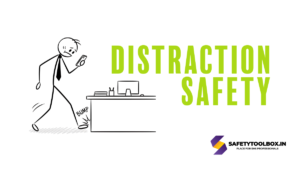
Distraction is one of the most underestimated safety risks at work. Many accidents do not happen because machinery fails or procedures are missing, but because attention is lost at the wrong moment. Mobile phones, stress, gossip, and pressure quietly reduce focus until an incident occurs.
Distraction safety is not just about telling people to “pay attention.” It is about identifying distraction risks, understanding how they create harm, and managing them through proper systems and culture.
Understanding Distraction in Safety Terms
From a safety perspective, distraction is any factor that diverts a person’s attention away from the task, environment, or hazard. It affects:
- Situational awareness
- Decision‑making
- Reaction time
Even a few seconds of lost focus can lead to serious injury.
Distraction can be:
- Physical (using a phone, turning head)
- Mental (stress, worry, negative thoughts)
- Social (talking, peer pressure)
- Organizational (poor culture, rushing)
Case Study on Distraction:
Case study 1: Train Crash Due to Digital Distraction: An investigation reported by IOSH Magazine revealed a fatal train accident in southern India, where operators failed to maintain situational awareness. The investigation indicated that digital distraction reduced attention at a critical moment, resulting in a catastrophic collision that caused 14 fatalities. [ioshmagazine.com]
Case Study 2: Mobile Phone Use While Driving: According to the National Highway Traffic Safety Administration (NHTSA), distracted driving caused over 3,200 deaths and more than 315,000 injuries in 2024 alone. Many of these incidents involved drivers using mobile phones for calls or messages while driving for work purposes, such as deliveries, site visits, or logistics operations. [nhtsa.gov]
Common Workplace Distractions and Their Impact
1. Mobile Phone Use at Work
Mobile phones cause visual, manual, and mental distraction at the same time.
Common risky situations:
- Using phone on stairs or platforms
- Walking while reading messages
- Operating tools or vehicles while distracted
- Listening to loud audio with earphones
In industrial environments, phone distraction has caused:
- Slips, trips, and falls
- Vehicle and forklift accidents
- Serious hand, arm, and crush injuries
2. Gossiping and Unplanned Conversations
Talking during critical tasks leads to:
- Missed warning signals
- Wrong execution of steps
- Reduced awareness of moving equipment
Many accidents happen not because the task is difficult, but because attention is split between work and conversation.

3. Stress and Mental Load
Stress is an invisible distraction.
Sources include:
- Work pressure and targets
- Personal or family problems
- Long working hours
- Fear of mistakes or job insecurity
A stressed mind is physically present but mentally elsewhere. This is extremely dangerous in high‑risk jobs.
4. Negative Safety Culture
Where safety culture is weak, distraction grows.
Warning signs:
- “Finish fast” attitude
- Ignoring near‑miss reporting
- Supervisors allowing unsafe behavior
- No consequences for distracted acts
When people believe speed is valued more than safety, they unconsciously take risks.
5. Peer Group Pressure
People often follow unsafe behavior to:
- Fit in with the team
- Avoid being seen as slow
- Avoid asking questions
This creates normalized risk, where unsafe actions become routine.
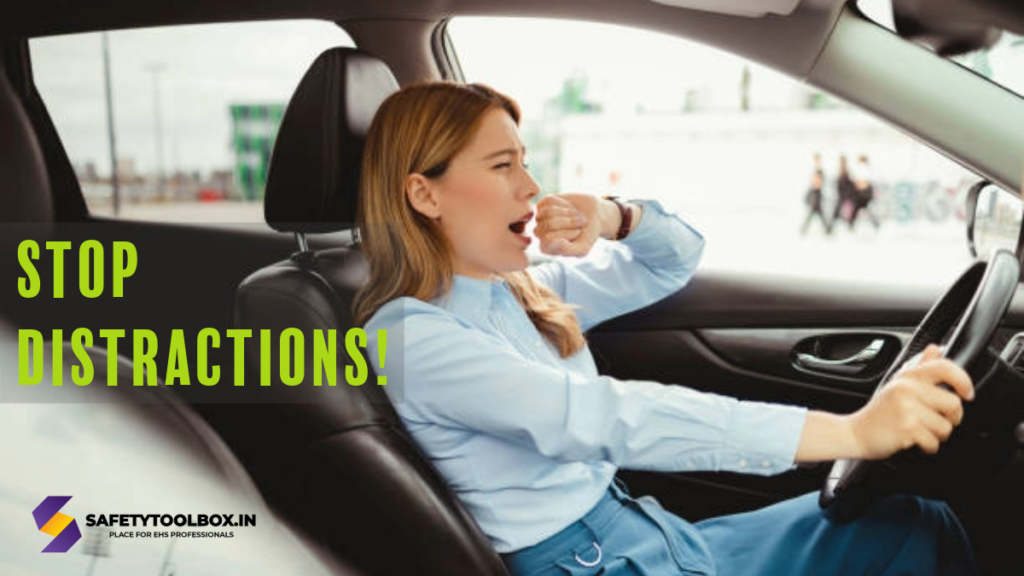
Distraction During Risk Assessment: What We Often Miss
Many risk assessments focus mainly on equipment and physical hazards, but ignore human behavior and attention risks. While Conducting Risk Assessment, Identify Distraction Risks
During risk assessment, ask:
- Does this task require high concentration?
- Are workers exposed to phones, noise, or interruptions?
- Is the task repetitive or boring?
- Is there time pressure or fatigue involved?
- Are people working near traffic or moving machinery?
Distraction must be treated as a hazard, not as a personal weakness.
Some examples of Distraction Hazards to Identify
| Task or Area | Possible Distraction Risk |
|---|---|
| Staircases & walkways | Mobile phone use, talking while walking |
| Control rooms | Notifications, alarms overload |
| Construction sites | Gossip, peer pressure, noise |
| Driving / forklifts | Phone use, mental stress |
| Maintenance work | Interruptions during critical steps |
Risk Identification: What Can Go Wrong Due to Distraction
When distraction is present, risks increase such as:
- Slips, trips, and falls
- Struck‑by moving objects
- Caught‑between machinery
- Vehicle collisions
- Incorrect operation or wrong decisions
- Failure to respond to alarms or warnings
Distraction often reduces the margin of safety built into systems.
Risk vs Opportunity: A Mature Safety Thinking
Risks Due to Distraction
- Increased injuries and incidents
- Damage to equipment and property
- Production loss
- Legal and compensation costs
- Loss of trust and morale
Opportunities If Distraction Is Managed Well
- Fewer accidents and near misses
- Higher quality and productivity
- Stronger safety culture
- Better employee confidence
- Improved compliance and professionalism
Managing distraction is not just about avoiding harm: it is about improving overall performance.
How to control Distraction Safety Risks (Practical Controls)
1. Engineering and Environmental Controls
- Clear walkways and signage
- Dedicated phone‑free zones
- Reduced noise where possible
- Better lighting to support awareness
2. Administrative Controls
- Mobile phone usage policy
- Clear rules for high‑risk tasks
- No interruption policy during critical operations
- Job rotation to reduce mental fatigue
- Planned breaks to manage stress
3. Training and Awareness
- Toolbox talks on distraction risks
- Real accident examples
- Near‑miss discussions
- Training on mental focus and situational awareness
4. Leadership and Culture
- Supervisors leading by example
- Encouraging people to speak up
- Rewarding safe behavior
- Correcting unsafe acts without blame
A safe workplace is one where attention is respected and protected.
Key Learning:
Distraction is not a small issue. It is a human factor risk that silently contributes to some of the most serious accidents: both on roads and inside workplaces.
Managing distraction requires:
- Awareness
- Strong risk assessment
- Practical controls
- Supportive safety culture
When we control distraction, we protect not just systems and equipment but lives.
For regular updates on safety topics or videos follow us on LinkedIn
for more safety toolbox talk click here…
1 thought on “Distraction Safety: Hidden Risk in the Workplace”